


Views: 2
Learn everything about ISO 27001 information security certification in India — benefits, requirements, process, cost, and how GacoiCert helps your business get certified. Apply today.
Table of Contents
- 1 Introduction: Why Information Security Certification Is Critical in India Today
- 2 What Is ISO 27001?
- 3 ISO 27001 vs IT Act vs DPDP Act: Understanding the Difference
- 4 What Does ISO 27001 Cover?
- 5 ISO 27001:2022 Structure — Key Clauses
- 6 Statement of Applicability (SoA) — A Unique ISO 27001 Requirement
- 7 Who Needs ISO 27001 Certification in India?
- 8 ISO 27001 Certification in India: Why It Matters Specifically
- 9 Top Benefits of ISO 27001 Certification for Indian Businesses
- 10 Information Security Threats ISO 27001 Addresses
- 11 ISO 27001 Risk Assessment: Practical Approach
- 12 ISO 27001 Certification Process in India: Step by Step
- 13 ISO 27001 Certification Timeline in India
- 14 ISO 27001 Certification Cost in India
- 15 ISO 27001 aur India Ki Regulatory Landscape
- 16 ISO 27001 aur Cloud Security
- 17 Key Information Security KPIs to Track After Certification
- 18 Common Mistakes Organizations Make with ISO 27001
- 19 Why Choose GacoiCert for ISO 27001 Certification in India?
- 20 Frequently Asked Questions (FAQs)
- 21 Conclusion: Information Security Is Business Security
- 22 Need ISO 27001 Certification
Introduction: Why Information Security Certification Is Critical in India Today
Aaj ke digital age mein, har business — chahe woh ek small startup ho ya large enterprise — data par depend karta hai. Customer information, financial records, employee details, intellectual property, aur business strategies — yeh sab sensitive information hai jo protect karna absolutely zaroori hai.
India mein digital transformation tezi se ho rahi hai. Digital India initiative, UPI payments ecosystem, e-commerce boom, aur IT/ITES sector ki global leadership — yeh sab milke ek aisi reality create kar rahe hain jahan data security ek business necessity ban gayi hai.
Aur threat landscape? Increasingly alarming hai. India globally top 5 most targeted countries mein hai cyberattacks ke liye. Ransomware attacks, data breaches, phishing campaigns, aur insider threats — sab badh rahe hain. CERT-In (Computer Emergency Response Team of India) ke data ke mutabiq, India mein reported cybersecurity incidents har saal dramatically increase ho rahe hain.
Is reality mein ISO 27001 Information Security Management System (ISMS) certification ek powerful, internationally recognized solution hai. Yeh standard ensure karta hai ki aapki organization information security ko systematically manage karti hai — reactive approach ki jagah proactive approach ke saath.
GacoiCert ke is comprehensive guide mein hum cover karenge ISO 27001 ka har pehlu — kya hai, India mein kyun zaroori hai, benefits kya hain, certification process kya hai, aur aap kaise shuru kar sakte hain.
What Is ISO 27001?
ISO 27001 ek internationally recognized standard hai jo Information Security Management Systems (ISMS) ke liye requirements specify karta hai. Ise International Organization for Standardization (ISO) aur International Electrotechnical Commission (IEC) ne jointly develop kiya hai — isliye iska full name ISO/IEC 27001 hai.
ISO 27001 ek comprehensive framework provide karta hai jo ensure karta hai ki:
- Organization apni information assets ko systematically identify aur protect kare
- Information security risks effectively assess aur manage kiye jaayein
- Information security controls systematically implemented aur monitored hon
- Applicable laws aur regulations comply kiye jaayein
- Customers aur stakeholders ka trust maintain kiya jaaye
Important: ISO 27001 sirf IT companies ke liye nahi hai. Yeh har industry ke liye applicable hai — banking, healthcare, manufacturing, government, retail, logistics — jo bhi organization sensitive information handle karti hai.
ISO 27001 Ka Latest Version
Current version ISO/IEC 27001:2022 hai, jo October 2022 mein published hua. Isme significant updates the — Annex A controls restructured karke 114 se 93 kar diye gaye (kuch merge kiye, kuch naye aaye), aur cybersecurity aur privacy concepts ko strengthen kiya gaya.
ISO 27001 vs IT Act vs DPDP Act: Understanding the Difference
Bahut saare Indian businesses confuse hote hain ISO 27001, IT Act, aur naye Digital Personal Data Protection Act ke beech. Yahan clarity hai:
| Aspect | ISO 27001 | IT Act 2000 (amended 2008) | DPDP Act 2023 |
|---|---|---|---|
| Type | International Standard | Indian Law | Indian Law |
| Developed By | ISO/IEC | Government of India | Government of India |
| Scope | Full ISMS framework | Cybercrime, electronic transactions | Personal data protection |
| Mandatory | No (voluntary) | Yes — applicable to all | Yes — applicable to data fiduciaries |
| Global Recognition | Very High | India-specific | India-specific |
| Management System | Yes — full system | No — legal framework only | No — legal framework only |
Key Point: ISO 27001 certification India ke IT Act aur DPDP Act compliance mein significantly help karta hai, lekin dono alag requirements hain. ISO 27001 ek proactive management approach provide karta hai jab ki laws minimum legal requirements define karti hain.
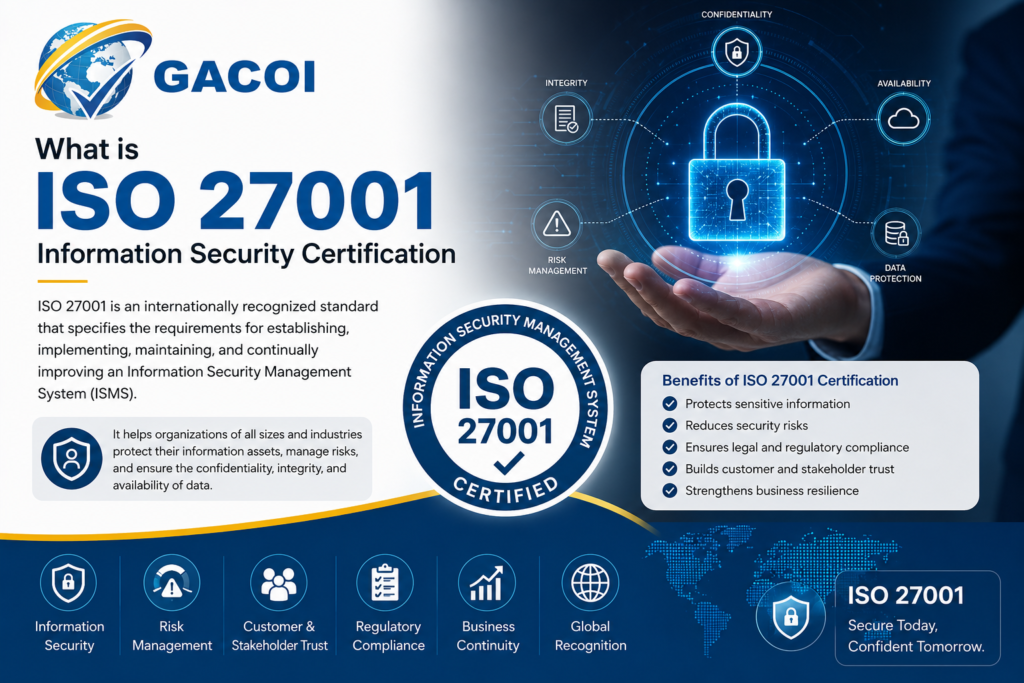
What Does ISO 27001 Cover?
ISO 27001 ek complete Information Security Management System define karta hai jo include karta hai:
Information Security Triad — CIA
ISO 27001 teen core principles protect karta hai:
- Confidentiality: Information sirf authorized persons ko accessible ho
- Integrity: Information accurate aur complete rahe — unauthorized modification se protected
- Availability: Authorized users ko information timely aur reliably accessible rahe
Risk-Based Approach
ISO 27001 ka core philosophy risk management hai — identify karo ki kya valuable hai, kya threats hain, vulnerabilities kya hain, aur risk level kya hai — phir proportionate controls implement karo.
Annex A Controls (ISO 27001:2022)
ISO 27001:2022 mein 93 security controls hain, 4 themes mein organized:
Organizational Controls (37 controls):
- Information security policies
- Information security roles aur responsibilities
- Threat intelligence
- Information security in project management
- Supplier relationships
- Incident management
- Business continuity
- Legal aur compliance requirements
People Controls (8 controls):
- Screening of employees
- Terms aur conditions of employment
- Information security awareness aur training
- Disciplinary process
- Remote working security
- Confidentiality agreements
Physical Controls (14 controls):
- Physical security perimeters
- Physical entry controls
- Secure areas
- Clear desk aur clear screen
- Equipment maintenance aur security
- Secure disposal of equipment aur media
Technological Controls (34 controls):
- User endpoint devices security
- Privileged access rights
- Information access restriction
- Cryptography aur key management
- Secure development practices
- Network security
- Web filtering
- Malware protection
- Vulnerability management
- Data leakage prevention
- Monitoring, logging, aur auditing
- Cloud services security
- Data masking
ISO 27001:2022 Structure — Key Clauses
ISO 27001:2022 ISO ka High Level Structure (HLS) follow karta hai jo ISO 9001 aur ISO 22000 ke saath aligned hai:
Clause 4: Context of the Organization
Organization kis environment mein operate karti hai — regulatory landscape, business context, aur stakeholder expectations. ISMS scope define karna — which information assets, processes, aur locations cover kiye jaayenge.
Clause 5: Leadership
Top management ka genuine information security commitment. Information Security Policy establish karna. CISO ya equivalent role appoint karna. Resources aur authority provide karna.
Clause 6: Planning
Information security risks aur opportunities identify karna. Risk assessment methodology establish karna. Risk treatment options select karna. Information security objectives set karna.
Clause 7: Support
Resources, competence, awareness, communication, aur documented information manage karna. Especially important: employees ko information security ke importance ki genuine understanding honi chahiye.
Clause 8: Operation
ISMS ko actually implement karna — risk assessment conduct karna, risk treatment implement karna, Annex A controls implement karna, Statement of Applicability (SoA) maintain karna.
Clause 9: Performance Evaluation
ISMS effectiveness monitor karna, measure karna, analyze karna. Internal audits. Management review.
Clause 10: Improvement
Nonconformities aur corrective actions. Continual improvement of ISMS.
Statement of Applicability (SoA) — A Unique ISO 27001 Requirement
ISO 27001 mein ek unique document hota hai — Statement of Applicability (SoA). Yeh document:
- Sab 93 Annex A controls list karta hai
- Har control ke liye batata hai ki applicable hai ya nahi
- Applicable controls ke liye justification aur implementation status provide karta hai
- Non-applicable controls ke liye exclusion justification provide karta hai
SoA aapke ISMS ka “fingerprint” hai — yeh aapki organization ki specific security posture ko reflect karta hai. Har organization ka SoA different hoga depending on their risk environment, business nature, aur applicable regulations.
Who Needs ISO 27001 Certification in India?
ISO 27001 virtually every industry ke liye applicable hai:
Information Technology aur ITES:
- Software development companies
- IT service providers
- BPO aur KPO organizations
- Data centers
- Cloud service providers
- Managed service providers
- SaaS companies
Banking, Financial Services aur Insurance (BFSI):
- Banks aur NBFCs
- Insurance companies
- Payment processors aur fintech
- Stock brokers aur wealth management
- Microfinance institutions
Healthcare aur Pharmaceuticals:
- Hospitals aur healthcare systems
- Health IT companies
- Pharmaceutical manufacturers
- Medical device companies
- Clinical research organizations (CROs)
Government aur Public Sector:
- Government IT departments
- Smart city projects
- E-governance initiatives
- Defense contractors
Manufacturing aur Industrial:
- Automotive companies (aur tier 1/2 suppliers)
- Electronics manufacturers
- Chemical aur process industries
- Industrial IoT implementations
Retail aur E-commerce:
- E-commerce platforms
- Retail chains with digital operations
- Payment card processing merchants
Professional Services:
- Legal firms handling sensitive client data
- Accounting aur audit firms
- Management consultancies
- Research organizations
Education:
- Universities aur educational institutions
- EdTech companies
- Online learning platforms
Telecommunications:
- Telecom operators
- Internet service providers
Agar aapki organization sensitive data handle karti hai — customer data, financial information, intellectual property, ya employee records — ISO 27001 aapke liye relevant hai.
ISO 27001 Certification in India: Why It Matters Specifically
India ke context mein ISO 27001 certification ki special relevance hai:
DPDP Act 2023 Compliance
India ka naya Digital Personal Data Protection Act (DPDP Act) 2023 significant data protection requirements impose karta hai. ISO 27001 implementation DPDP Act ke technical aur organizational security measures requirements meet karne mein significantly help karta hai.
CERT-In Directions Compliance
CERT-In (Indian Computer Emergency Response Team) ne 2022 mein mandatory cybersecurity directives issue kiye — incident reporting timelines, vulnerability management, aur log maintenance requirements. ISO 27001 ka structured approach in directives comply karne mein help karta hai.
RBI aur SEBI Cybersecurity Frameworks
Reserve Bank of India (RBI) aur Securities and Exchange Board of India (SEBI) ne financial sector ke liye detailed cybersecurity frameworks issued kiye hain. ISO 27001 certified organizations in frameworks ke significant portions already meet karti hain.
IT/ITES Export aur Global Clients
India ka IT sector global clients serve karta hai — US, UK, EU, Australia — jo increasingly ISO 27001 certification apne Indian vendors se require karte hain. Without certification, Indian IT companies increasingly deals lose kar rahe hain.
Data Localization aur Cross-Border Data Transfers
International data transfer requirements increasingly complex ho rahe hain. ISO 27001 certified organizations cross-border data flows manage karne mein better positioned hain.
NASSCOM aur Industry Requirements
IT industry bodies aur major Indian conglomerates (TCS, Infosys, Wipro, HCL) apne vendor ecosystems mein ISO 27001 certification require kar rahe hain.
Government Procurement
India mein government IT tenders mein ISO 27001 certification increasingly mandatory requirement ban rahi hai.
Cybersecurity Insurance
Insurance companies ISO 27001 certified organizations ko cybersecurity insurance mein better terms aur lower premiums offer karte hain.
Top Benefits of ISO 27001 Certification for Indian Businesses
1. Comprehensive Information Security Risk Management
ISO 27001 ensure karta hai ki aapki organization information security risks ko systematically identify, assess, aur treat kare — rather than ad-hoc security measures implement karne ke bajaye ek structured, risk-based approach use kare.
2. Legal aur Regulatory Compliance
DPDP Act, IT Act, CERT-In Directions, RBI/SEBI cybersecurity frameworks, aur international regulations — ISO 27001 ka structured approach aapko compliance landscape navigate karne mein help karta hai.
3. Customer aur Partner Trust
ISO 27001 certificate customers aur business partners ko assure karta hai ki aap unka data seriously protect karte hain. Enterprise clients ke saath deals close karne mein yeh ek key differentiator hai.
4. Business Continuity aur Resilience
ISO 27001 require karta hai ki organization business continuity plans maintain kare — jo ensure karta hai ki major security incidents (ransomware, etc.) mein business operations continue kar saken aur recovery quick ho.
5. Reduced Data Breach Risk aur Costs
Systematic security controls se data breaches ki likelihood dramatically reduce hoti hai. India mein ek average data breach cost IBM ke 2024 Data Breach Report ke mutabiq approximately $2.18 million hai — certification cost se kahin zyada.
6. Competitive Advantage in IT/ITES Market
Indian IT companies jo global clients serve karte hain unke liye ISO 27001 practically essential hai. Certified companies consistently uncertified competitors ke khilaf RFPs mein win karte hain.
7. Employee Security Awareness Culture
ISO 27001 require karta hai ki employees genuine information security awareness rakhein — insider threats reduce hote hain aur security incidents kam hote hain.
8. Structured Incident Response
ISO 27001 require karta hai ki organization ke paas documented, tested incident response procedures hon — security incidents quickly contain karne aur recover karne ki capability develop hoti hai.
9. Supplier aur Third-Party Risk Management
ISO 27001 require karta hai ki aap apne suppliers aur third-party service providers ki security bhi assess karein — poore supply chain mein security standards raise hote hain.
10. Integration with Other ISO Standards
ISO 27001:2022 ISO 9001:2015 (Quality) aur ISO 22301:2019 (Business Continuity) ke saath seamlessly integrate hota hai — ek Integrated Management System banane ke liye.
11. Reduced Cyber Insurance Premiums
ISO 27001 certified organizations ko cyber insurance companies typically better coverage terms aur lower premiums offer karti hain — direct financial benefit.
12. Intellectual Property Protection
Software code, business processes, trade secrets, aur R&D data — ISO 27001 controls intellectual property leakage prevent karte hain — jo Indian IT aur pharma companies ke liye especially valuable hai.
Information Security Threats ISO 27001 Addresses
Cyber Threats
Commonly encountered information security threats jo ISO 27001 address karta hai:
- Ransomware: Files encrypt karke ransom demand karna — India mein rapidly increasing hai
- Phishing aur Spear Phishing: Deceptive emails/messages se credentials steal karna
- Business Email Compromise (BEC): Senior executive impersonation se financial fraud
- Malware aur Trojans: Systems compromise karne ke liye malicious software
- SQL Injection aur Web Application Attacks: Database aur web systems exploit karna
- DDoS Attacks: Services unavailable karna
- Zero-day Exploits: Unknown vulnerabilities exploit karna
- Advanced Persistent Threats (APTs): Long-term stealthy attacks, often state-sponsored
Insider Threats
- Malicious Insiders: Deliberately information steal ya sabotage karna
- Negligent Employees: Accidental data exposure — weak passwords, wrong email recipients, unencrypted devices
- Third-Party Contractors: Vendor access abuse
Physical Threats
- Laptop/device theft: Unencrypted devices physical theft
- Dumpster diving: Improper document disposal
- Shoulder surfing: Unauthorized observation of screens
- Social engineering: Physically impersonating someone to gain access
Technical Vulnerabilities
- Unpatched software vulnerabilities
- Misconfigured cloud services (open S3 buckets, etc.)
- Weak authentication — no MFA
- Excessive access rights (principle of least privilege violation)
- Unencrypted sensitive data at rest aur in transit
ISO 27001 Risk Assessment: Practical Approach
ISO 27001 ka core hai risk assessment. Practical approach:
Step 1: Asset Identification
Sab information assets identify karein:
- Customer data databases
- Financial systems aur records
- Employee records
- Intellectual property (source code, designs, formulas)
- Business email systems
- Cloud services
- Physical servers aur network equipment
- Third-party data processing agreements
Step 2: Threat Identification
Har asset ke liye potential threats identify karein:
- Unauthorized access
- Data corruption
- System unavailability
- Data disclosure
Step 3: Vulnerability Assessment
Current security weaknesses identify karein:
- Missing patches
- Weak access controls
- Inadequate monitoring
- Poor physical security
Step 4: Risk Evaluation
Risk = Likelihood × Impact formula se ya qualitative risk matrix se har risk ko evaluate karein.
Step 5: Risk Treatment
High-priority risks ke liye treatment options choose karein:
- Mitigate: Control implement karke risk reduce karna
- Accept: Risk acceptable hai, koi additional control nahi
- Avoid: Risk create karne wali activity band karna
- Transfer: Cyber insurance ya outsourcing ke through risk transfer karna
Step 6: Select Controls
ISO 27001 Annex A se appropriate controls select karein jo identified risks treat karti hain.
ISO 27001 Certification Process in India: Step by Step
Step 1: Management Commitment
Top management ka genuine commitment information security ke liye — budget approve karna, resources provide karna, Information Security Policy establish karna.
Step 2: Define ISMS Scope
Exactly define karein ki ISMS kya cover karega — which business units, locations, processes, aur information assets. Clear scope boundaries set karna critical hai.
Step 3: Appoint Information Security Manager / CISO
Qualified person appoint karein jo ISMS implementation aur maintenance lead kare. Larger organizations mein dedicated CISO ya Information Security team.
Step 4: Conduct Risk Assessment
ISO 27001 ki risk assessment methodology follow karke:
- Information assets identify karein
- Threats aur vulnerabilities assess karein
- Risk levels determine karein
- Risk treatment decisions document karein
Step 5: Develop Risk Treatment Plan
High-priority risks ke liye treatment plans develop karein — which controls implement karne hain, timeline, responsible persons, aur expected risk reduction.
Step 6: Develop Statement of Applicability (SoA)
Sab 93 Annex A controls ke liye:
- Applicable hai ya nahi
- Justification for inclusion/exclusion
- Implementation status
- Reference to evidence
Step 7: Implement Security Controls
Selected controls actually implement karein:
- Technical controls (firewalls, encryption, MFA, DLP, SIEM, etc.)
- Administrative controls (policies, procedures, training)
- Physical controls (access controls, clean desk, secure disposal)
Step 8: ISMS Documentation
- Information Security Policy
- ISMS Scope Document
- Risk Assessment Methodology
- Risk Assessment Report
- Risk Treatment Plan
- Statement of Applicability (SoA)
- Asset Inventory
- Access Control Policy
- Incident Response Procedure
- Business Continuity Plan
- Supplier Security Policy
- Acceptable Use Policy
- Internal Audit Procedure
Step 9: Employee Awareness Training
Sab employees ko information security awareness training provide karein — phishing recognition, password management, clean desk, incident reporting. Annual refreshers zaroori hain.
Step 10: Implement Monitoring aur Logging
Security monitoring infrastructure implement karein:
- Security Information and Event Management (SIEM) ya equivalent
- Access logs maintain karna
- Security event alerting
- Vulnerability scanning
Step 11: Internal Audit
Formal internal audit conduct karein verify karne ke liye ki:
- ISMS ISO 27001 requirements meet karta hai
- Controls effectively implemented hain
- Documentation properly maintained hai
Step 12: Management Review
Top management review kare:
- Security incident reports
- Audit findings
- Risk treatment status
- Regulatory compliance updates
- ISMS improvement opportunities
Step 13: Select GacoiCert as Certification Body
GacoiCert ko certification body choose karein — accredited, experienced, aur India-specific regulatory knowledge rakhne wale auditors ke saath.
Step 14: Stage 1 Audit (Document Review)
GacoiCert auditors aapke ISMS documentation review karte hain — verify karne ke liye ki documented ISMS ISO 27001 requirements adequately address karta hai aur organization Stage 2 audit ke liye ready hai.
Step 15: Stage 2 Audit (Certification Audit)
Auditors aapki organization ka on-site assessment karte hain:
- ISMS implementation effectiveness verify karte hain
- Controls ki actual implementation check karte hain
- Employees se security awareness ka assessment karte hain
- Risk treatment implementation review karte hain
- Incident response capabilities assess karte hain
- Monitoring aur logging systems verify karte hain
Step 16: Certification Issuance
Successful audit ke baad ISO/IEC 27001:2022 certificate issue hota hai — 3 saal ke liye valid, annual surveillance audits ke saath.
ISO 27001 Certification Timeline in India
| Organization Type | Approximate Timeline |
|---|---|
| Small Organization (< 50 employees, limited scope) | 3 – 5 months |
| Medium Organization (50–500 employees) | 5 – 9 months |
| Large Enterprise (500+ employees, complex IT) | 9 – 15 months |
| IT/ITES Company (single business unit) | 4 – 7 months |
| Multi-site Organization | 10 – 18 months |
GacoiCert ka experienced information security team aapki certification journey efficiently guide karta hai — unnecessary delays ke bina.
ISO 27001 Certification Cost in India
Cost depend karta hai:
Organization Size aur Scope: Zyada employees, zyada systems, larger scope — zyada audit time aur cost.
IT Environment Complexity: Diverse technology stack, cloud services, legacy systems — more complex risk assessment aur more controls.
Number of Sites: Multi-location organizations mein certification cost zyada hoti hai.
Certification Body Fees: GacoiCert competitive aur transparent pricing offer karta hai.
Consultant Fees: Agar aap external ISMS consultant hire karte hain — jo small/mid organizations ke liye highly recommended hai.
Technology Investment: SIEM tools, MFA solutions, DLP software, vulnerability scanners, encryption tools — depending on current security maturity.
Training Investment: Staff awareness training aur technical security training.
ROI Perspective: India mein average data breach cost approximately $2.18 million hai (IBM 2024). Ek ransomware attack se business downtime, recovery costs, aur reputational damage lakhs se crores mein ho sakti hai. ISO 27001 certification investment is exposure se kahin kam hai. Long-term mein, enterprise client wins jo certification enable karta hai investment ko clearly justify karta hai.
ISO 27001 aur India Ki Regulatory Landscape
Indian organizations ke liye multiple regulatory requirements hain. ISO 27001 in sab ke saath align karta hai:
DPDP Act 2023: ISO 27001 ke technical aur organizational security measures directly DPDP Act ki “reasonable security safeguards” requirements fulfill karne mein help karte hain. Data fiduciaries jo ISO 27001 certified hain compliance demonstrate karne mein much better positioned hain.
CERT-In Directions (April 2022): CERT-In ke mandatory directions — 6-hour incident reporting, log retention, vulnerability management — ISO 27001 ka ISMS inhe systematically address karta hai.
RBI Cybersecurity Framework: Banks aur NBFCs ke liye RBI ka Cybersecurity Framework ISO 27001 controls ke saath strongly aligned hai. Certified organizations RBI audits mein better performance karte hain.
SEBI Cybersecurity aur Cyber Resilience Framework: Market intermediaries ke liye SEBI requirements ISO 27001 ke through effectively address ki ja sakti hain.
IRDAI Information aur Cyber Security Guidelines: Insurance companies ke liye IRDAI guidelines ISO 27001 implementation se significantly address hoti hain.
GacoiCert ke auditors India ke entire regulatory landscape ko deeply samajhte hain aur aapko multiple requirements simultaneously address karne mein guide kar sakte hain.
ISO 27001 aur Cloud Security
Modern organizations increasingly cloud par dependent hain — AWS, Azure, Google Cloud, aur Indian providers jaise Tata Communications aur BSNL. ISO 27001:2022 mein dedicated cloud security controls hain (Control 5.23 — Information security for use of cloud services).
ISO 27001 cloud security ke liye address karta hai:
- Cloud service provider selection aur assessment
- Shared responsibility model samajhna aur document karna
- Cloud access management aur privileged access
- Data classification aur handling in cloud
- Cloud monitoring aur logging
- Data residency aur sovereignty requirements
- Exit strategy aur data portability
Key Information Security KPIs to Track After Certification
Security Incident Metrics:
- Number of security incidents per month (by severity)
- Mean Time to Detect (MTTD) security incidents
- Mean Time to Respond (MTTR) to security incidents
- Percentage of incidents resulting in data breach
- Phishing simulation click rate (target: decreasing trend)
Vulnerability Management:
- Critical vulnerabilities unpatched beyond SLA (target: zero)
- Mean time to patch critical vulnerabilities
- Number of systems with known unpatched vulnerabilities
Access Control:
- Accounts with excessive privileges
- Orphaned accounts (former employees)
- MFA adoption rate (target: 100% for sensitive systems)
- Privileged access review completion rate
Awareness aur Training:
- Security awareness training completion rate (target: 100%)
- Phishing simulation failure rate (target: decreasing)
ISMS Health:
- Internal audit findings (major aur minor non-conformances)
- Corrective action closure rate aur timeliness
- Risk treatment plan completion percentage
Common Mistakes Organizations Make with ISO 27001
Mistake 1: IT-Only Implementation
Information security sirf IT department ki responsibility samajhna. ISO 27001 require karta hai ki poori organization — HR, finance, operations, legal — information security mein involved ho.
Mistake 2: Tick-Box Compliance Approach
Controls paper par implement karna bina actually security improve kiye. Auditors real-world effectiveness check karte hain — documentation aur reality mein gap bahut common failure hai.
Mistake 3: Inadequate Risk Assessment
Generic risk templates copy-paste karna bina apne specific business, technology, aur threat environment analyze kiye. Effective risk assessment organization-specific aur honest honi chahiye.
Mistake 4: Ignoring People aur Processes
Technology controls par bahut zyada focus karna (firewalls, antivirus) lekin people (awareness training) aur process controls (procedures, policies) neglect karna. Majority of breaches human element involve karti hain.
Mistake 5: Poor Scope Definition
ISMS scope bahut broad ya bahut narrow define karna. Broad scope unmanageable hoti hai; narrow scope critical assets exclude kar deti hai.
Mistake 6: Inadequate Incident Response Preparation
Documented incident response procedure banana lekin usse kabhi test na karna. Tabletop exercises aur simulated incidents regular practice mein hone chahiye.
Mistake 7: Supplier Security Neglect
Apne third-party vendors aur cloud providers ki security adequately assess na karna. Major breaches often vendor compromise se shuru hote hain.
Mistake 8: Treating Certification as a One-Time Event
Certificate milne ke baad ISMS ko maintain na karna. ISO 27001 continual improvement require karta hai — threat landscape change hota rehta hai.
Why Choose GacoiCert for ISO 27001 Certification in India?
Information Security Expertise: Hamare auditors India ke IT, BFSI, healthcare, aur manufacturing sectors ko deeply samajhte hain — aapke industry-specific threats aur regulatory requirements ka practical knowledge.
Accredited Status: Internationally recognized accreditation se — aapka certificate global clients aur partners ke saamne credible hoga.
India-Specific Regulatory Knowledge: DPDP Act, CERT-In Directions, RBI/SEBI cybersecurity frameworks, IRDAI guidelines — haare auditors sab samajhte hain.
Practical, Business-Focused Guidance: Sirf compliance check karna nahi — haare auditors genuine security improvement partners hain jo business reality samajhte hain.
Streamlined Process: Efficient certification journey jo aapka time respect kare aur unnecessarily disruptive na ho.
Multi-Standard Capability: ISO 27001, ISO 9001, ISO 22301 (Business Continuity), ISO 20000 (IT Service Management) — combined certification ki expertise.
Post-Certification Support: Certificate ke baad surveillance audits aur continuous improvement mein haari team available hai.
Transparent Pricing: Pehle se clear scope aur cost — koi hidden charges nahi.
Frequently Asked Questions (FAQs)
Q1: Kya ISO 27001 India mein mandatory hai?
ISO 27001 technically voluntary hai, lekin DPDP Act, CERT-In Directions, aur RBI/SEBI frameworks compliance ke liye practically essential ho raha hai. IT sector clients aur government tenders increasingly ISO 27001 require kar rahe hain.
Q2: ISO 27001 aur DPDP Act mein kya relationship hai?
DPDP Act require karta hai ki data fiduciaries “reasonable security safeguards” implement karein. ISO 27001 ka systematic ISMS is requirement ko meet karne ka globally accepted approach hai. ISO 27001 certified organizations DPDP compliance demonstrate karne mein much better positioned hain.
Q3: Kya small IT companies ISO 27001 le sakti hain?
Bilkul. ISO 27001 scope flexible hai — aap specific business unit ya service tak scope limit kar sakte hain. Small IT companies ke liye especially valuable hai kyunki enterprise clients ISO 27001 require karte hain.
Q4: ISO 27001 certificate kitne saal ke liye valid hai?
3 saal ke liye valid, annual surveillance audits ke saath aur 3 saal baad recertification audit.
Q5: ISO 27001 aur SOC 2 mein kya choose karein?
Agar aapke primary clients India aur global markets (Europe, Middle East, Asia) mein hain — ISO 27001 better choice hai (internationally recognized). Agar primarily US clients serve karte hain — SOC 2 consider karein. Many organizations dono achieve karte hain. GacoiCert aapko guide kar sakta hai.
Q6: ISO 27001 ke liye kitna technical security already hona chahiye?
Koi minimum requirement nahi hai shuru karne ke liye. Risk assessment current state identify karega aur gap closure plan banaya jaayega. ISO 27001 process hi aapko systematically security improve karne mein help karta hai.
Conclusion: Information Security Is Business Security
ISO 27001 certification sirf ek compliance exercise nahi hai — yeh ek strategic business investment hai. Yeh demonstrate karta hai ki aapki organization customer aur stakeholder data ke liye genuinely committed hai — aur yeh commitment aapke liye enterprise contracts win karti hai, regulatory penalties avoid karti hai, aur aapke business ko future-proof banati hai.
India ka digital economy unprecedented pace se grow kar raha hai — aur cyber threats bhi saath saath badh rahi hain. Is environment mein, ISO 27001 certified organizations clearly ahead hain. Jo businesses abhi invest nahi karti hain, unhe data breaches, regulatory penalties, aur lost business opportunities ka increasingly high price chukana padega.
Aapke business ka future aapki information security par depend karta hai. GacoiCert ke saath ISO 27001 certification journey aaj hi shuru karein — apne customers ka data protect karein, apne brand ki reputation protect karein, aur apne business ko next level par le jaayein.
Need ISO 27001 Certification
🟡GACOI Cert provides globally recognized ISO certification, cybersecurity, privacy, AI governance, compliance, audit, and professional training services, helping startups, businesses, enterprises, laboratories, healthcare organizations, and government institutions achieve international standards and build lasting trust.
🟡For other Legal and Trademark related services Visit
👉 Money Recovery Cases
👉 Property Disputes
👉 Business & Licence Registrations
🟡 Protect Your Rights
👉 Domestic Violence Legal Support
👉 Stridhan Recovery
👉 Mutual Consent Divorce
👉 Contested Divorce Filing
👉 Child Custody and Maintenance
👉 Matrimonial Property Settlement
👉 NRI Divorce Services
👉 Alimony and Maintenance
📞 Call Now: +91 8595439395
🕐 Free Consultation: Monday to Saturday, 10 AM to 6 PM


